
In the last days of May, I had the absolute pleasure of attending the MakeIT 2024 conference. Once again, the conference was held in the beautiful seaside city of Portorož, Slovenia.
The conference is a joint venture with the JCON conference, so you can catch one or two sessions on Java as well. I really value learning about related technologies as well. This year I listened in on caching options in Java and the use of JDBC driver.
You should come next year. There is also a good selection of English speakers, so even for foreigners, there is a reason to travel.

The Slides
Workshop – Patching Oracle Database
This is a full workshop on patching Oracle Database. It includes a hands-on lab, so you can try it on your own.
You should flip through the slides if you want a deep dive on patching.
You can also try the hands-on lab for free.
Best Practices for Upgrade to Oracle Database 23ai
This session and the slides help you prepare for the next long-term support release of Oracle Database.
Patch Me If You Can
This session and the slides give a quick fly-over of the essentials of patching.
Oracle Data Pump – News, Internals, Tips and Tricks
I had the pleasure of talking about Oracle Data Pump and presenting some new features. If you’re curious about a faster way of creating indexes and adding constraints, you can flip through the slides.
Thanks
Thanks to the organizer of MakeIT 2024 for pulling off yet another successful conference, to the sponsors for making it all possible, and to everyone who attended my sessions or the conference in general.
Impressions
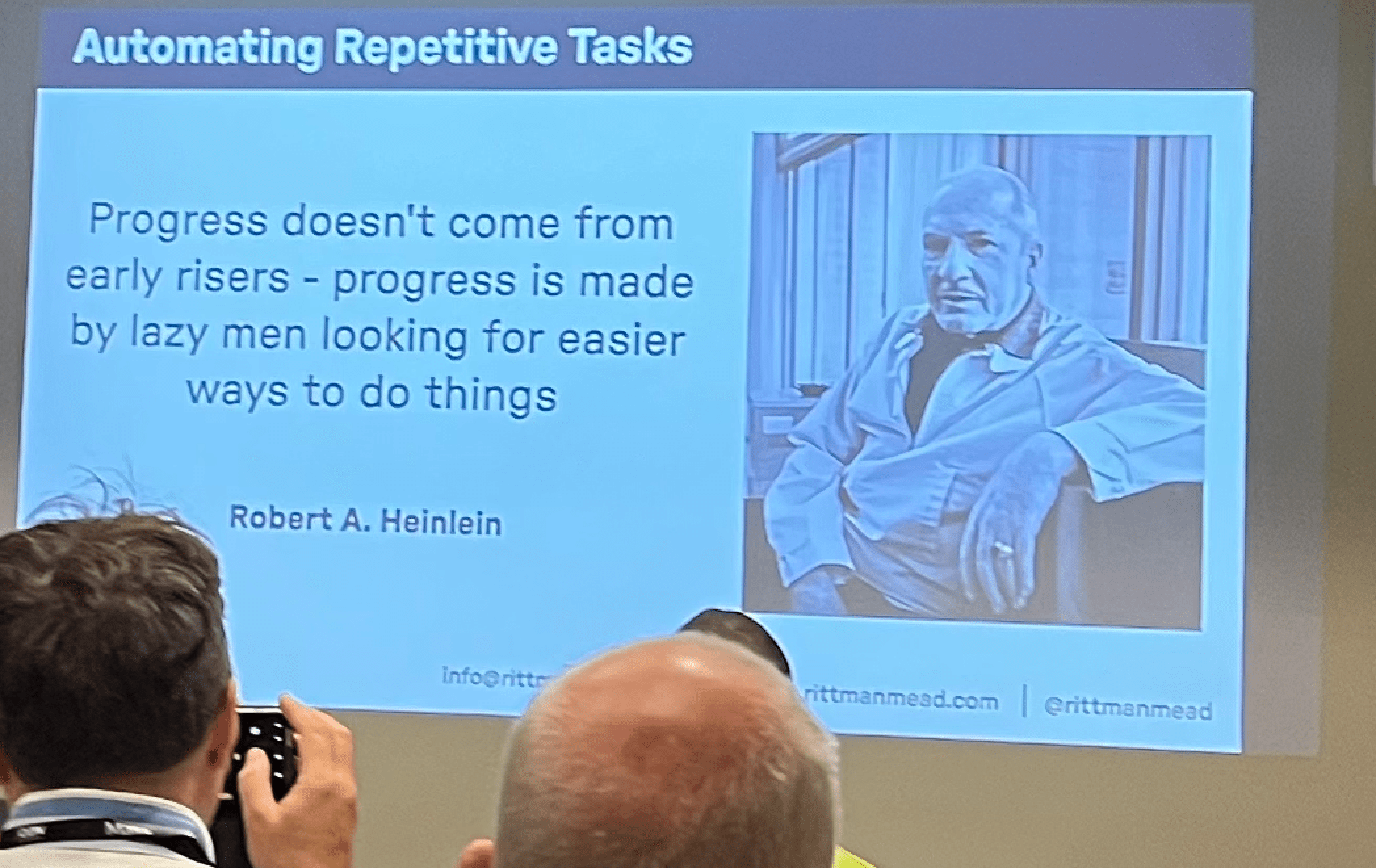
Quote of the conference
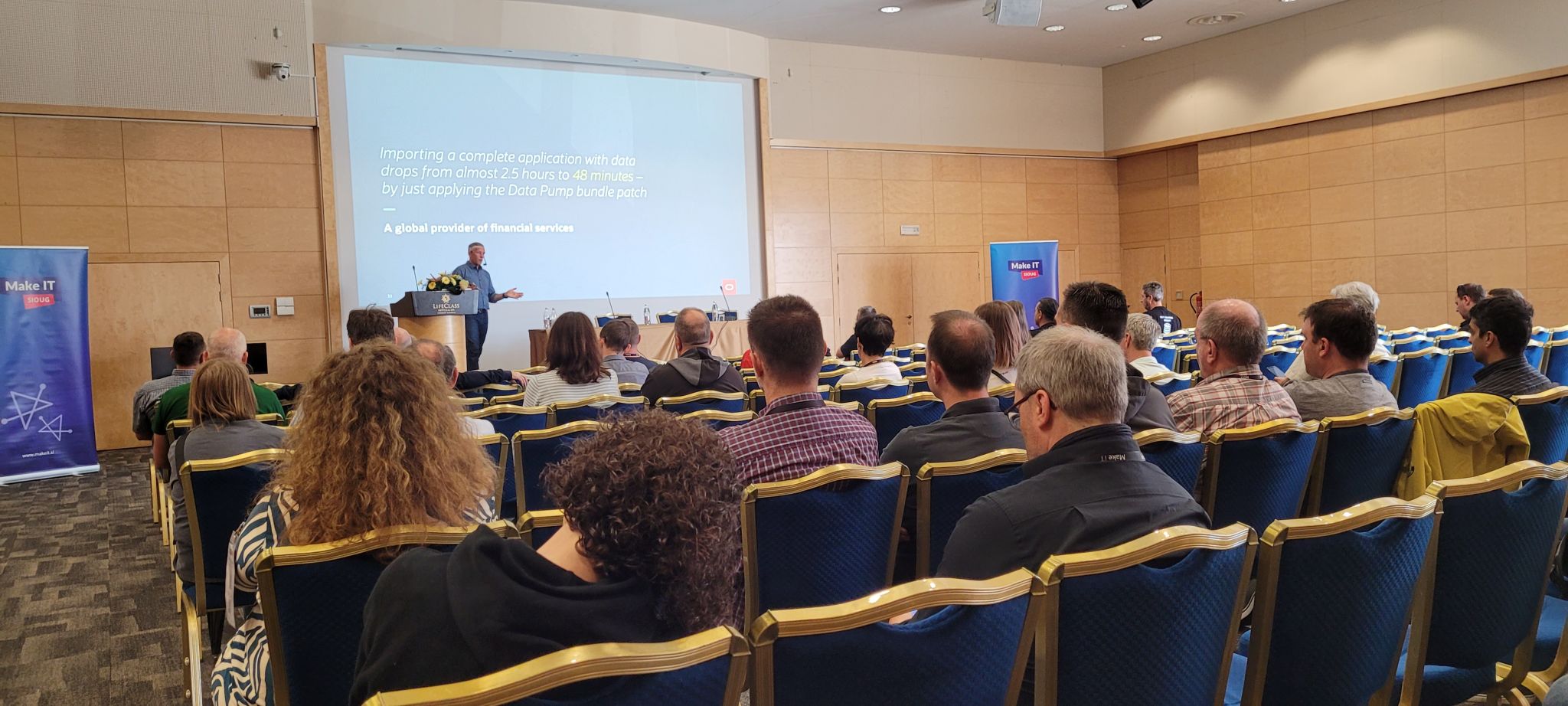
My Data Pump talk
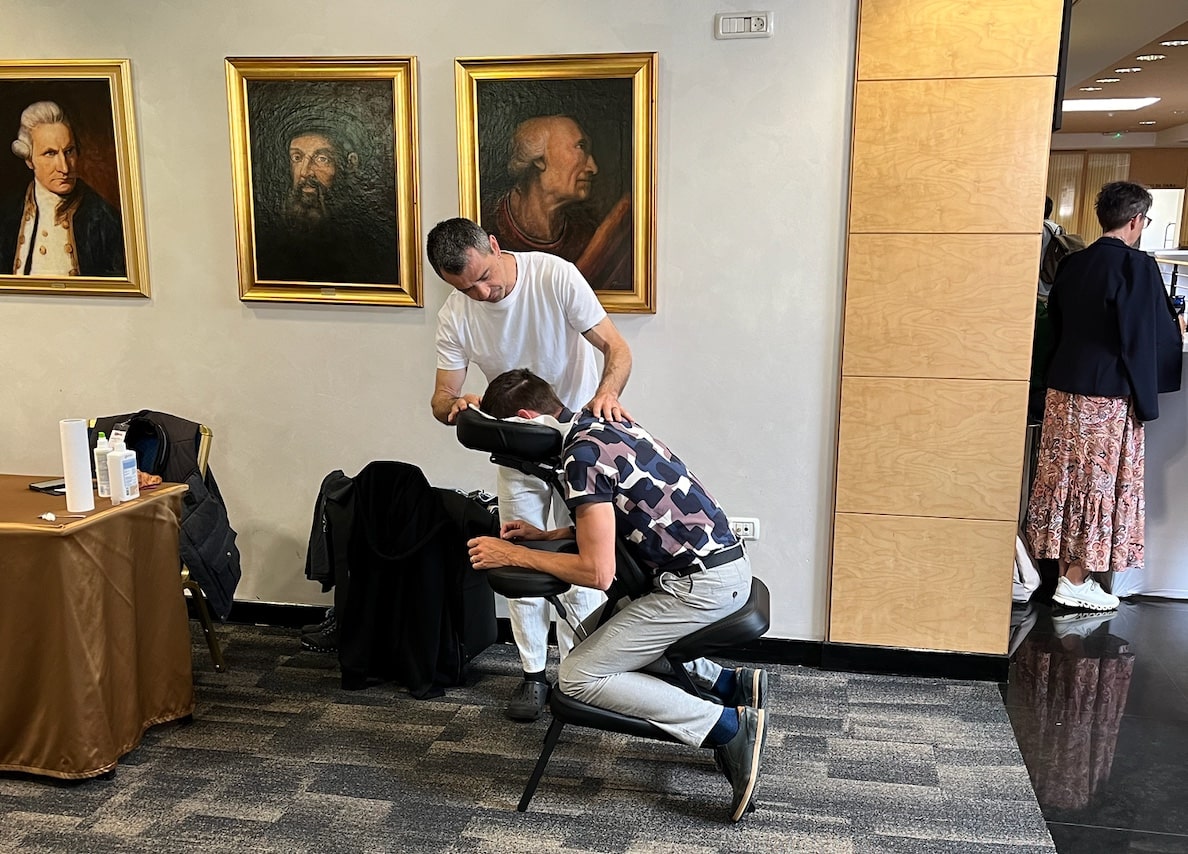
Going to conference is hard
Low hanging clouds at the airport

 Databases Are Fun
Hello,
I tried using Data Pump Bundle Patch for a while but the datapatch made me give up, when you change one release (RU) to another you need to rollback the previous Data Pump bundle patch and only then run the new one and this can consume lot of time process patch. average 40 minutes
LikeLike
Hi Piero,
You’re right. There is a dedicated Data Pump bundle patch for each Release Update. If you use in-place patching, it means that you must roll off the patch before you can move to the next Release Update and apply the new Data Pump bundle patch. This is one of the many reasons why we do not recommend using in-place patching.
If you use out-of-place patching this is not a problem at all. You can provision the new Oracle home in advance with the new bundle patch. There will be no extra downtime using out-of-place patching.
You can learn more about out-of-place patching in one of our previous webinars: https://www.youtube.com/watch?v=sF-rmD78zIo&t=2471s. Also, head over to the “Slides” section – there are multiple slide decks with more information about out-of-place patching.
Regards,
Daniel
LikeLike
Hi Daniel,
Same problem with out-of-place because the time that is taking is the datapatch <–
datapatch takes a long time to rollback the old version and apply the new one, regardless of whether you use the in-place or out-of-place strategy
I use Fleet Patching and Provisioning and it always does out-of-place but problem is only time of datapatch if Data Pump Bundle Patch is installed
LikeLike
Hi,
But there is no downtime when you run datapatch. You can do that on a running database: https://www.youtube.com/watch?v=sF-rmD78zIo.
Perhaps it would be a good idea to run a datapatch sanity check to see if there is something in your database that is causing slowness. I don’t have a blog post about it yet but check MOS doc ID 2680521.1.
40 min for a datapatch rollback/apply sequence sounds like way to long. If the sanity checks doesn’t reveal anything I suggest that you file an SR.
Regards,
Daniel
LikeLike